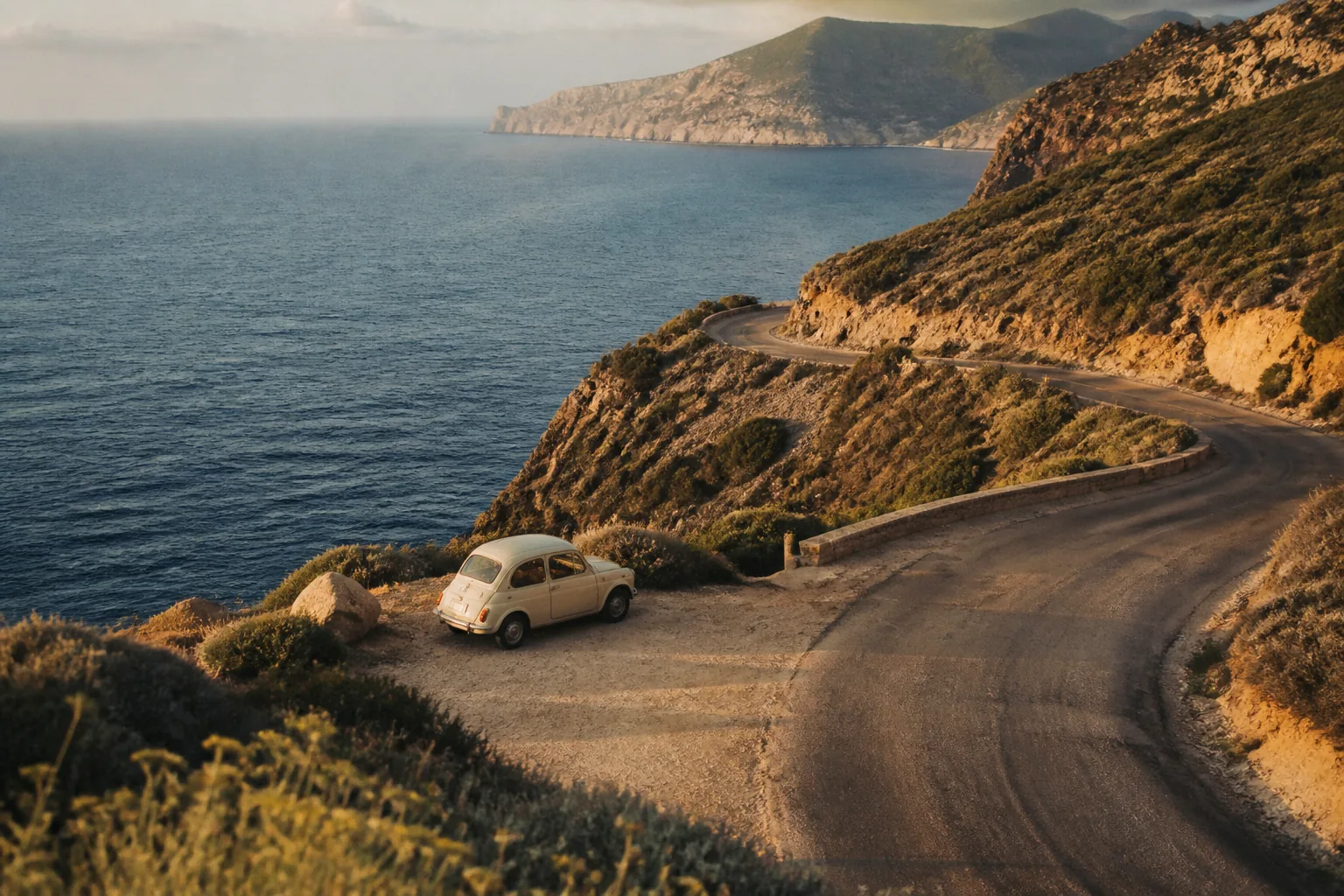
The plan lived in a small black notebook: 1,460 kilometres, three borders, seven hotel reservations and a list of swims precise enough to include their suggested duration. By day four, the notebook was in the glovebox and the car was making a sound like a drawer full of cutlery.
The sound beneath the bonnet
We coasted into a gravel turnout above a sweep of cobalt water. The engine gave one final, theatrical cough. There was no shade, no signal and, according to the notebook, no time for this. I stood in the road holding my phone toward the sky while Sam opened the bonnet and looked at it with the solemn concentration of someone reading a language he did not speak.
A bread van found us twenty minutes later. Its driver listened to the engine, shrugged, and made a phone call. Then he handed us two apricots from a paper bag and pointed toward a village we could not see. The mechanic arrived in a faded blue truck. He spoke very little English; we spoke none of his language. He tapped the clutch cable, drew a broken line in the dust, and smiled as though the problem had already become a story.
The day stopped being a delay the moment we stopped comparing it with the day we had planned.
A town with other plans
The garage sat behind a café on a square barely wide enough for three parked cars. Repairs would take until morning. Our hotel was ninety kilometres away. Before I could begin solving the wrong problem, the café owner placed two glasses of cold water on the table and called the guesthouse above the bakery.
That evening the square filled without announcement. Paper garlands appeared between balconies. Someone tested a trumpet. Folding tables came out of doorways carrying tomato salad, grilled fish and loaves still warm enough to fog their paper wrappers. We had arrived on the night of the village’s summer feast, though nobody seemed concerned with explaining it. A chair was pulled out, then another. The itinerary disappeared beneath a plate.
The distance we did not cover
By ten the next morning the car was ready. The mechanic refused our attempt to add something for the inconvenience. He accepted coffee instead. We cancelled two reservations, drew a slow line along the coast on the paper map, and decided that one country would be plenty.
For the rest of the trip, we stopped before we were tired. We took roads because they were shaded, not because they were fast. The notebook became useful again, but only for writing down the names of people, the taste of things and directions that began with landmarks rather than numbers. We covered less than half the planned distance. It was the first journey I remember in full.
Notes to take with you
For the road
- Leave one completely unclaimed day in every week of travel.
- Carry a paper map; it makes detours feel like choices instead of errors.
- Stop for the day while you still have enough energy to notice where you are.
Written on the road,
edited at the kitchen table.