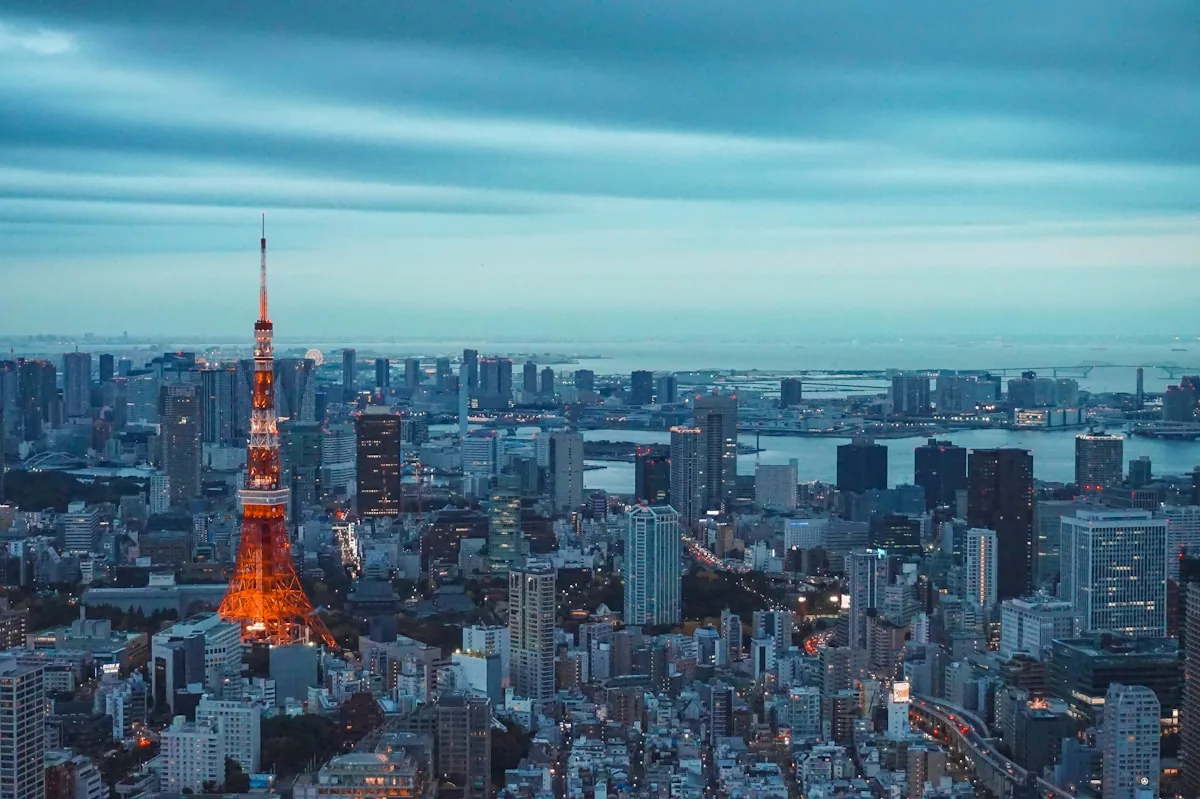
Tokyo became manageable the morning we stopped treating it like one enormous city. We chose a station, drew a loose circle around it, and decided that anything outside the circle could wait. The reward was a day with fewer transfers and far more details: the curtain above a noodle counter, an umbrella rack arranged by color, and a record shop we entered because the handwritten sign looked kind.
Start smaller than the map
Our first plan connected twelve saved places across half the rail network. On paper it looked efficient. In practice it meant watching neighborhoods through train windows while checking the time. The better version began in Yanaka with coffee and toast in a quiet kissaten, then wandered toward small galleries and the cemetery paths without assigning every hour a destination.
The useful rule was one area per half-day. We kept a must-see at the center and two optional pins nearby, then followed whatever looked interesting between them. A bakery queue became lunch. A side street became an hour of ceramics and stationery. Nothing dramatic happened, which is exactly why the day still feels so vivid.
The city felt less overwhelming as soon as we gave ourselves permission to see less of it.
Make the practical things easy
Before leaving the hotel, we saved the address in both English and Japanese, downloaded the route, and checked which station exit placed us on the right side of the road. Those three minutes prevented the familiar arrival ritual of standing beneath a complicated intersection while a map spun in circles.
We also kept a small amount of cash separate from the main wallet, carried a light tote for the tiny purchases that accumulated through the day, and planned a reset stop before dinner. Tokyo rewards stamina, but it rewards attention more. A short break made the evening feel like a second day instead of the exhausted end of the first one.
After the checklist
The last train was not a dare; it was a boundary. We checked our route home before ordering another drink and moved closer to our station as the night grew later. With the logistics settled, there was room to enjoy the smaller theater of the city: bicycles clicking past, kitchen curtains lifting, office lights switching off one floor at a time.
Near midnight we bought convenience-store desserts and sat where we could hear the platforms. The photo from that moment is technically terrible: reflected lights, half a face, a paper bag in the foreground. It is still my favorite because it contains the whole trip - not the Tokyo we had planned to collect, but the one we finally slowed down enough to notice.
Notes to take with you
For the road
- Choose one neighborhood per half-day and keep nearby saves as options, not obligations.
- Save your accommodation address in Japanese and note the best station exit before setting out.
- Check the route home before the late part of the evening, then put the timetable away.
- Leave an empty hour for the shop, cafe or side street that was never on the list.
Written on the road,
edited at the kitchen table.